All-on-X Bridge Design Starts With the Prosthesis, Not the Scan
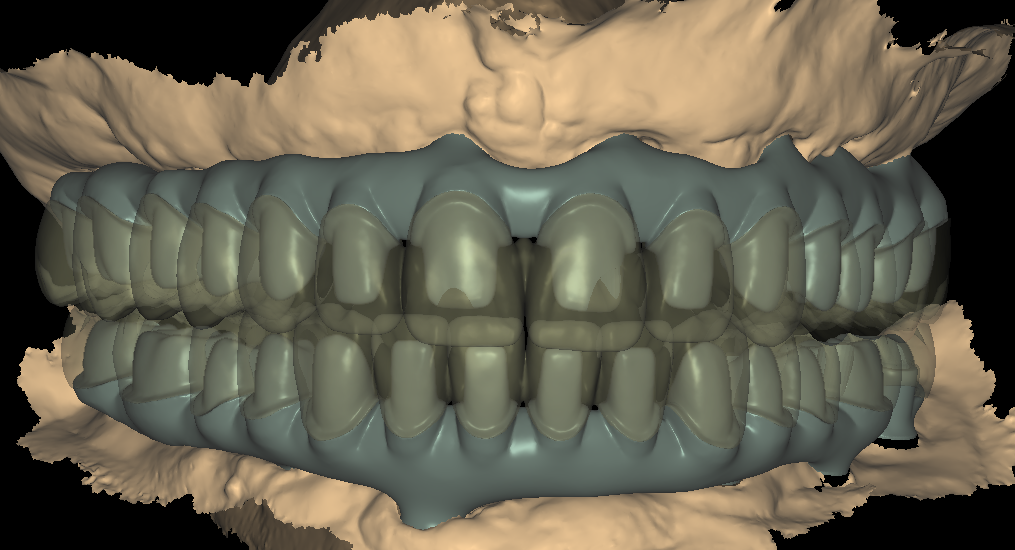
All-on-X bridge design only becomes predictable when the prosthesis leads the plan. Most full-arch remakes trace back to a design that started at the scan rather than the smile. No amount of CAD precision repairs a tooth position that was never right. So we build every full-arch case in the same order: setup, approval, framework, full contour. Each stage comes back within 12–24 hours. Nothing moves forward until your team signs off on the stage before it.
When a laboratory sends a full-arch case, the first question is rarely about software. It is about what the patient will see. Tooth position, lip support and occlusal plane decide where the screw channels can sit. They also decide how deep the access holes run, and whether a one-piece bridge is even an option. Get that order right and most technical decisions make themselves. Reverse it, and the designer spends the whole case solving problems that should never have existed.
Why the final tooth position drives everything
A full-arch bridge is not a row of crowns joined together. It is a prosthesis that has to sit on implants placed in whatever bone the patient has left. The setup therefore does two jobs at once. It defines the aesthetic result the clinician approves, and it reveals the space left for the framework. If the teeth move two millimeters forward, the channel angles change. If the occlusal plane drops, the connector heights change with it. Full-arch prosthetics also work because of osseointegration. A design chain that ignores the biology underneath will not survive contact with the mouth.
What the framework inherits from the setup
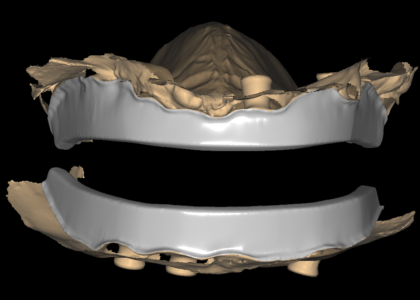
With the setup locked in, the framework inherits a specific set of constraints. Screw access needs to clear the occlusal surface and stay reachable with a driver. Connectors need enough cross-section to carry a full arch. Titanium and zirconia behave differently here, so settle the material choice before framework geometry takes shape. Cases with a titanium or PEEK framework plus a layered superstructure get their interface planned at this point. From here on, the tooth setup stays untouched.

Four Inputs Every All-on-X Bridge Case Needs
Full-arch work stalls more often in the inbox than on the bench. A case arrives without one piece of data. The designer guesses, and the guess returns as a revision a week later. Four inputs prevent almost all of that. Start with a verified implant-level scan taken with an open tray, plus the opposing arch and bite registration. Next comes either an approved tooth setup scan or clear instructions to run the setup stage first. Then the material, segmentation and Ti-base decisions. Finally the implant system and library the case should run on. Scan bodies and interfaces differ between systems, so a bridge built on the wrong library turns into scrap metal.
- Verified implant-level scan — open tray, plus opposing arch and bite.
- Approved setup — or ask us to run the setup stage first.
- Material and segmentation — full-contour zirconia, titanium or PEEK.
- Implant system — so the design uses the right library.
Verified implant-level scans
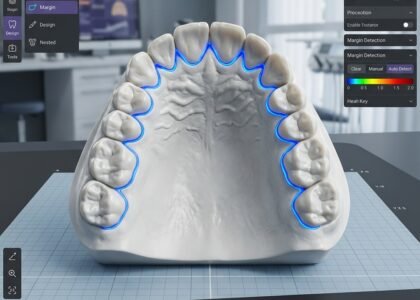
A scan that captures soft tissue but misses implant position is not a foundation for a full-arch bridge. Analog or scan-body data has to line up with the model. When a case arrives with a visible discrepancy, we stop and ask before sketching anything. That message costs a few minutes. A remake costs a week and a patient appointment that cannot move.
Implant library and Ti-base selection
Implant systems change their interfaces over time. Libraries also differ from one another in small, consequential ways. Send the system name and we design against the right library, including multi-unit abutments and angled channels where the case calls for them. If a library is not on our bench yet, we say so before starting. We would rather raise that question than answer it halfway through a case.
One-Piece or Segmented Design
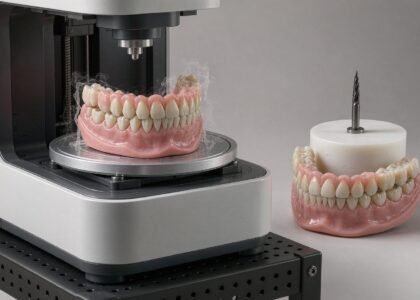
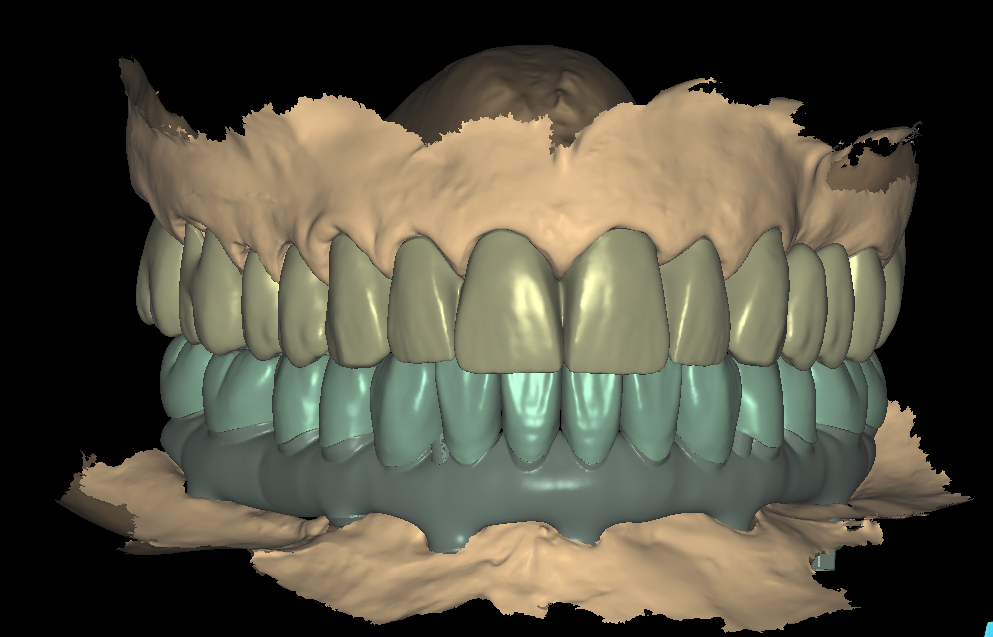
Splitting a full-arch bridge is a design decision with production consequences. A one-piece design gives the cleanest single-body result. It also demands a large enough mill blank and a sintering protocol that matches the span. Your clinician needs a seating sequence they can manage in the chair as well. Segmented designs break the span into manageable pieces. Printed and milled sections can also run in parallel, which helps when the delivery date is tight. Either way, plan the split before geometry becomes final. Connector position and cross-section both shift once the bridge divides.
There is also the verification step, and it belongs before the final contour. Sectioned, print-ready verification jigs let your team confirm that implant positions on the model match the mouth. They also let everyone check passive fit before an expensive final layer eats the schedule. We include those jig files as standard on full-arch cases, along with stage documentation. The clinical team then signs off on the same facts your designer worked from. When a jig shows a mismatch, the fix stays cheap at that stage and gets expensive at the next one.
Stage Gates That Keep Full-Arch Design Predictable
A full-arch case touches more people than a single crown. The clinician, the technician and the patient all end up reading the same file. Stage gates keep them on the same page. Nothing proceeds without approval, so a change of mind at setup costs one design iteration instead of a remake. Documentation travels with each stage. That way the person checking the file does not have to reconstruct the decisions behind it.
Each stage returns within 12–24 hours. A full-arch case can therefore move through setup, framework and full contour inside a normal working week. At intake we map the stage schedule against your delivery date. Urgent cases join the same queue with the appointment date attached. If the schedule cannot hold, we say so at intake rather than halfway through the case.
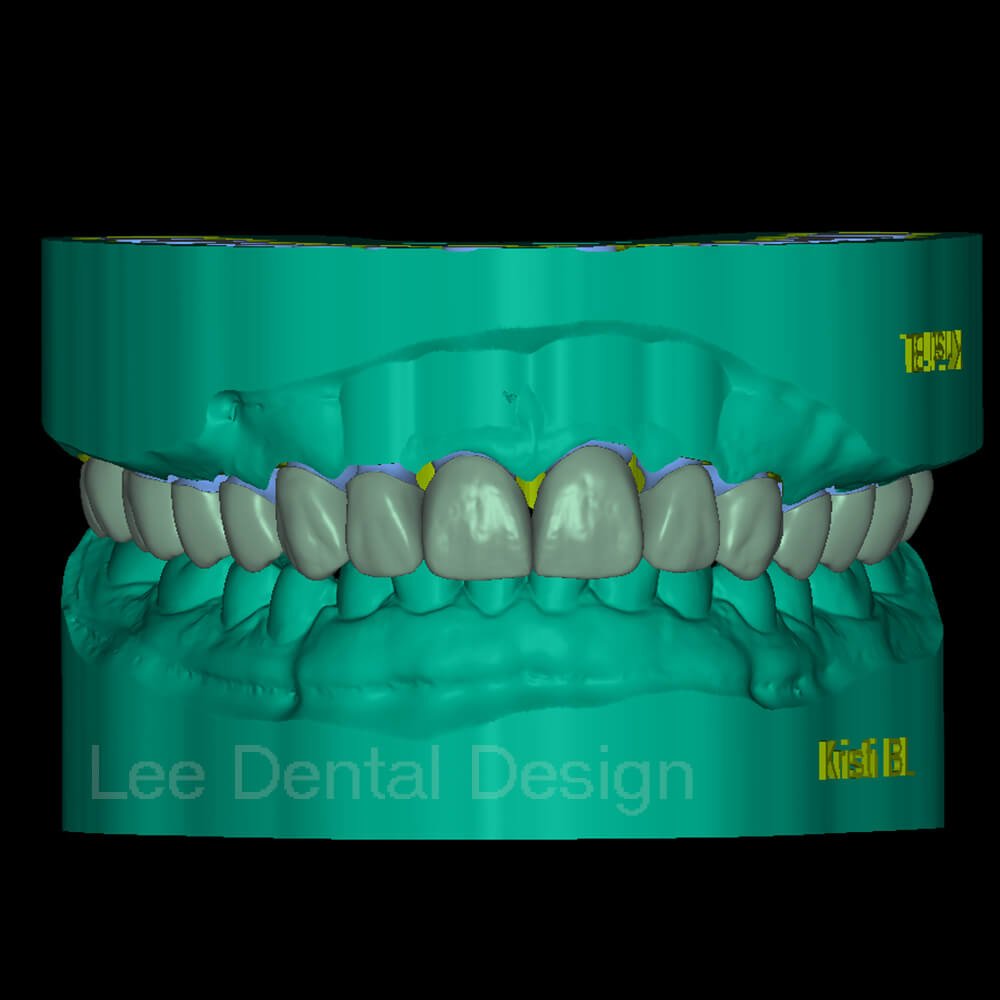
If you have a full-arch case on the bench this week, send the verified scans and the approved setup. Our All-on-X bridge design service will confirm the stage plan within one working day. That includes the material path and the delivery date. Laboratories that want the wider picture first can browse the full range of dental CAD design services. Anyone who would rather talk a case through can start a conversation with a designer instead.